
Introduction
Over the past few decades, display technology has changed quickly, going from big, heavy cathode ray tube TVs to sleek flat panels with amazing picture quality. The micro led tv is one of the most advanced and promising new technologies for consumer and professional displays. It is one of the most exciting new things to come out in recent years. This technology is a big step forward since it combines the finest features of current display systems while getting rid of many of their problems. Anyone who wants to know what the future of television will be like needs to know how this technology works. Screen quality is becoming more and more crucial for entertainment, gaming, and professional content creation.
What is the Micro LED Technology
Micro LED technology uses very small light-emitting diodes that work like individual pixels. These tiny LEDs each make their own light and color, so they don’t need a separate backlight. The fact that it emits its own light lets the micro LED TV get incredible brightness, contrast, and color accuracy. Micro LED uses inorganic elements that are more stable and long-lasting than the backlighting used in regular LCD panels or the organic compounds used in OLED displays.
How Micro LED TV Work
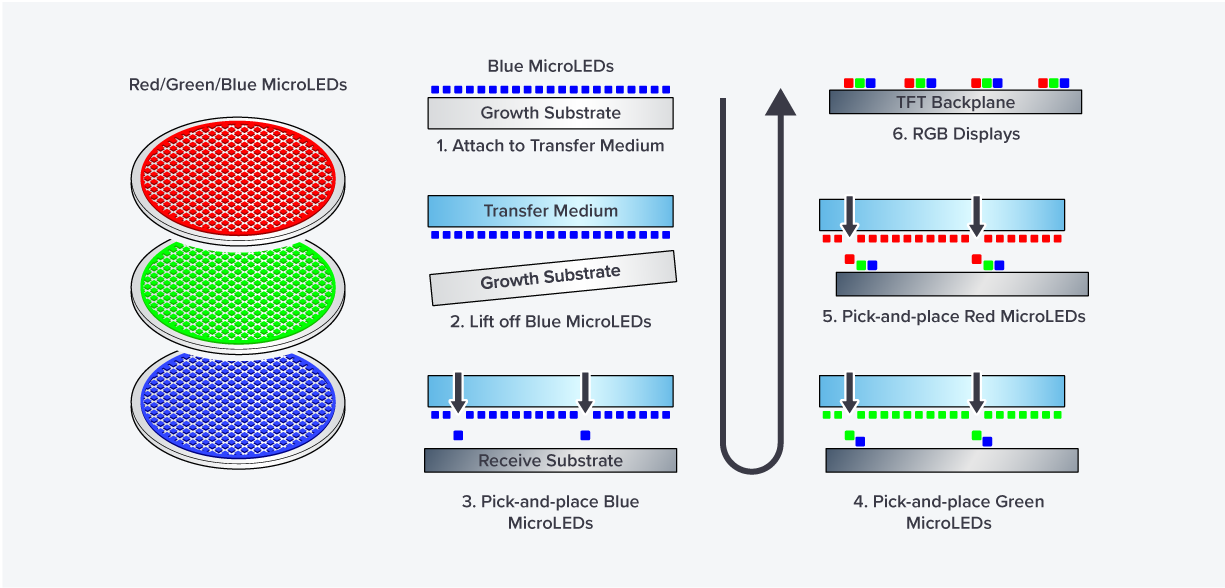
A micro LED TV has a matrix of millions of tiny LEDs at its core. Each LED stands for a single pixel or subpixel. There is a lot of care put into how these LEDs are organized on a display screen. The TV can show true blacks by turning off individual LEDs, while at the same time making other parts of the screen very bright. This is possible because each pixel can be controlled separately. This pixel-level control gives images a depth and realism that is very near to how the human eye sees light in the real world.
What Sets Micro LED TV Apart from LED TVs
LCD panels with LED lights behind them are what traditional LED TVs are. These lights shine on the screen from the edges or from behind, which can make the contrast less sharp and cause light to leak. Micro LED technology, on the other hand, doesn’t need backlighting at all. Each pixel gives forth its own light, which makes the contrast better, the details crisper, and the colors more precise. Because of this basic distinction, the mini LED TV works better than regular LED TVs.
Micro LED and OLED Technology
Each pixel on an OLED display makes its own light, which is called self-emissive. But OLED pixels are constructed of organic components that can break down over time. Micro LED is less likely to burn in and lose brightness over time because it employs inorganic elements. A tiny LED TV may get brighter at its peak than an OLED TV while yet keeping great black levels. This makes it perfect for bright spaces and big screens where brightness and longevity are very important.
Quality of the Picture and How Well it Looks

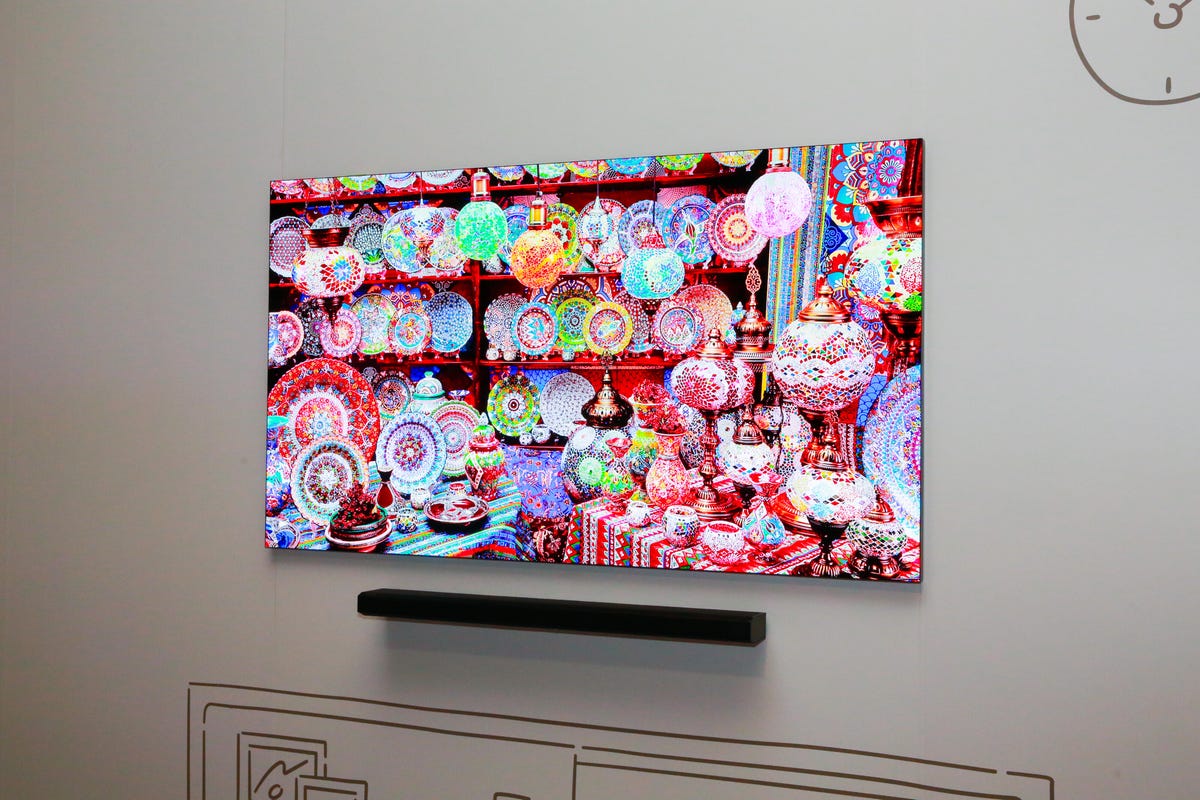
The picture quality of tiny LED technology is one of its most striking features. The ability to manipulate each pixel separately gives you color accuracy and contrast ratios that are unmatched. A tiny LED TV has bright colors that don’t get too bright and deep blacks that don’t lose information in the shadows. It also handles motion very well because it responds quickly, which makes it great for fast-paced sports, action movies, and high-frame-rate games.
How well it Can Change Brightness and Contrast
Micro LED screens are known for their brightness. These screens can get a lot brighter than OLED while yet keeping the colors accurate. This means that a tiny LED TV works very well in bright rooms where glare and ambient light would ordinarily make the picture worse. The contrast performance is still great because pixels may be totally turned off, which keeps bright highlights from washing out darker parts of the image.
How Well the Colors are Accurate and How Well HDR Works
Micro LED technology makes high dynamic range content much better. HDR material may be shown as the creators intended because it has a wide color range and precise control over brightness. A micro LED TV can show very realistic color changes, bright highlights, and dark shadows. This makes for a more realistic viewing experience than standard display technologies.
Long-Lasting and Durable
Another big plus of micro LED displays is that they last a long time. The LEDs are made of inorganic materials that don’t break down as quickly over time. There is very little chance of burn-in, even when static images are shown for a long time, unlike OLED displays. This makes a tiny LED TV great for business use, gaming, and long-term home entertainment installations where performance needs to be reliable.
Modular Design and the Capacity to Grow
The modular nature of micro LED technology is one thing that makes it stand out. You may easily put together individual panels to make screens of almost any size or aspect ratio. This scalability lets manufacturers make very big screens without losing quality. Because of this, more and more high-end home theaters, businesses, and digital signs are using tiny LED displays.
Managing Heat and Using Energy Efficiently
Micro LED displays use less energy than other types of displays, even if they are very bright. Direct light emission cuts down on the energy waste that comes with backlighting devices. Also, heat management is better because each LED works on its own, which spreads the heat output more equally over the panel. So, a mini LED TV may work well without using too much electricity or getting too hot.
Problems in Making Things and Costs
Micro LED technology has many benefits, but it also has a lot of problems when it comes to making things. Putting millions of tiny LEDs in the right place is a complicated and expensive procedure. During production, the yield rates can be low, which makes early tiny LED TVs cost a lot. Costs are likely to go down as manufacturing methods get better and production levels rise. This will make the technology easier for people to get.
Availability in the Market Right Now
Right now, tiny LED TVs are mostly found in the high-end and ultra-luxury market. They are often made to order and come in quite enormous sizes. This makes it less likely that the technology will be widely used, but it also shows how useful it could be. A tiny LED TV is the most advanced type of display technology available today, and it gives us a taste of what future TVs might be like.
Other Uses Besides Home Entertainment
Micro LED technology is great for corporate settings as well as homes. It is perfect for control rooms, broadcast studios, and public displays since it is bright, long-lasting, and can be scaled up or down. A tiny LED TV is a good choice for places where performance needs to be consistent over a long period of time because it is reliable and lasts a long time.
Games and Interactive Experiences
Micro LED displays have very low response times and fast refresh rates, which is great for gamers. This makes the movements smoother, the input latency shorter, and the visuals clearer. A tiny LED TV gives gamers an edge over their competitors and also makes the gaming experience better by showing movies in high definition.
What the Future Holds for Micro LED Technology
As research and development continue to move forward, the future of tiny LED technology seems bright. Micro LED displays are predicted to be in more houses since they are easier to make, smaller, and cheaper. As more people start using them, micro LED TV may become the new norm for high-end TV experiences, replacing outdated technologies that can’t keep up with their capabilities.
Conclusion
Micro LED technology is a big step forward in the development of display systems. It sets a new standard for visual performance by combining great brightness, exquisite blacks, long-lasting durability, and modular scalability. Current expenses make it hard for many to use, but new ideas are making it easier for more people to use. The mini LED TV is more than just a scientific triumph; it’s a look at the future of realistic and immersive visual entertainment.
Read More:- Corner TV Stand Design Ideas for Stylish and Space-Saving Homes